As the world celebrates the 165th birth anniversary of Rabindranath Tagore, I recall my journey to Santiniketan a while ago. It was an unplanned trip. I had to visit Kolkata, and while on the train, I suddenly decided to stop at Santiniketan railway station. Within minutes, I had arranged a room in a homestay lodge, and by the time I reached the station, it was already midnight.
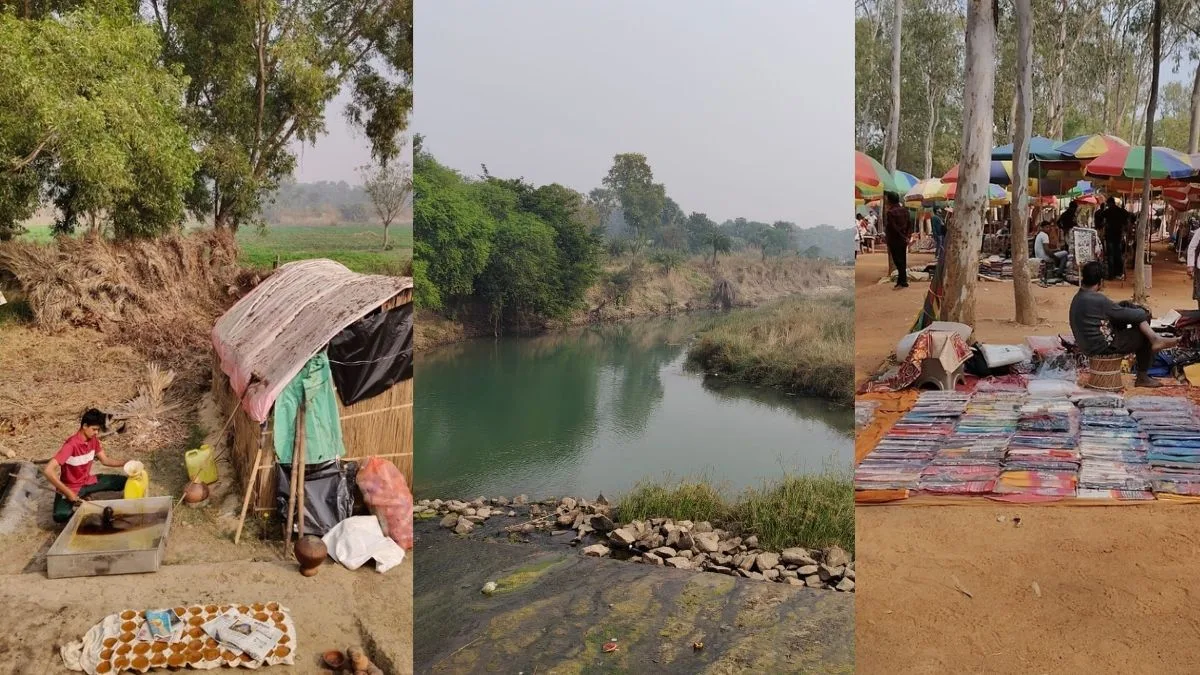
My day started with a visit to the Kopai River, situated near a quiet and serene corner of Bolpur. There was no rush, only stillness. The river is calm, and for someone who has never read Tagore’s poetry or understood his deep connection with the place, Kopai may appear to be just another ordinary river. There may seem to be nothing extraordinary about it.
Advertisement
But for someone who, at some point in life, has connected deeply with the writings and reflections of Tagore, the river feels almost divine. I experienced an unusual yet immensely soothing calmness there. A blanket of cool breeze surrounded me, and as I touched the flawless waters of Kopai, I felt as though I was touching a source of life itself. It seemed to wash away every burden I had been carrying within me.
In his collection ‘Punascha’ (1932), Tagore wrote about Kopai. It was the first poem in the collection, and even in translation, the essence of his emotions remains timeless. As I attempt to translate and explain fragments of it to readers, Tagore describes the banks of the Kopai as lands without fear. Kopai creates its own rhythm; it tolerates, but never completely submits. He writes that the river compromises with both land and water, much like a poet compromises with language and style. I felt that rhythm. I felt the stillness it carries, yet it never stops flowing.
As I wandered along the banks of Kopai, I realised that not much had changed. The pine trees still stood tall, perhaps now nearly 200 years old. The faces I encountered felt timeless too. An old man ran a small tea stall where I stopped for tea, and nearby, I saw another man selling ‘khejurer rosh’, the sweet sap extracted from date palm trees. It instantly reminded me of the 1973 classic ‘Saudagar’, starring Amitabh Bachchan and Nutan.
I had never tasted ‘khejurer rosh’ before, so I decided to give it a try. The very first sip felt like tasting amrit. No beverage, no sweetness in the world, could compare to it.
Tagore shared a deeply spiritual and inseparable bond with Santiniketan. In his poetry and creations, he never failed to mention it, and once a reader immerses themselves in his work, the presence of Santiniketan becomes impossible to miss. But visiting the place made me experience that connection in a far more personal way.
The beauty of Santiniketan is something words can hardly explain. It is like discovering something extraordinary in what most people would consider ordinary. The roads, the trees, the houses, the birds, the atmosphere—everything seems connected to something eternal, something profoundly calming, something no one would ever wish to escape from.
I also stopped at the Sonajhuri Haat, where one can find local handicrafts, handlooms, and art. But the place is far more than just a market. It feels like a celebration of life itself. Local tribal communities sang and danced to folk music, while a monk-like man played soulful tunes on his dotara. In his rhythm, one could hear the rhythm of life itself. And when he began singing Rabindra Sangeet, the entire atmosphere felt nothing short of divine.
Rabindranath Tagore spent a significant part of his life in Santiniketan. He built Visva-Bharati University, which remains a testament to his vision of education and culture. He gave the world a place that would forever be remembered through his creations, but I believe the relationship was never one-sided. Santiniketan, too, gave Tagore much in return—above all, serenity and peace.
As evening falls, one sees people quietly passing by, stopping for tea, or, on winter nights, enjoying hot ‘bhapa pitha’ from a small roadside stall. Life here moves slowly, yet steadily. The breeze carries a sense of calmness and warmth that gently settles into the soul. Among everything that Santiniketan offers, the Kopai River binds it all together. It gives one a chance at redemption, a chance to rediscover oneself, and a reason to never give up on what one has always believed in.
Tagore saw this, lived this, and transformed it into words that continue to breathe through his poetry, songs, and creations. Perhaps that is why Santiniketan feels less like a destination and more like an emotion—one that quietly stays with you long after you leave.
As I boarded my train back, I realised that I was not merely returning from a journey through a small town in Bengal. I was carrying back fragments of stillness, simplicity, and a strange sense of belonging that modern life often takes away from us. Santiniketan does not overwhelm you with grandeur; instead, it gently teaches you how beauty can exist in silence, in slow afternoons, in folk songs drifting through the air, and in the flowing rhythm of the Kopai.
And maybe that is the true legacy of Tagore, not just the literature he left behind, but the way he taught people to see life itself.